
How Many Revisions Do You Get? (Our Policy, Plainly Explained)
Your revision rounds are defined in your proposal and confirmed in your contract. The exact number depends on your project scope, and we agree it before the project starts.
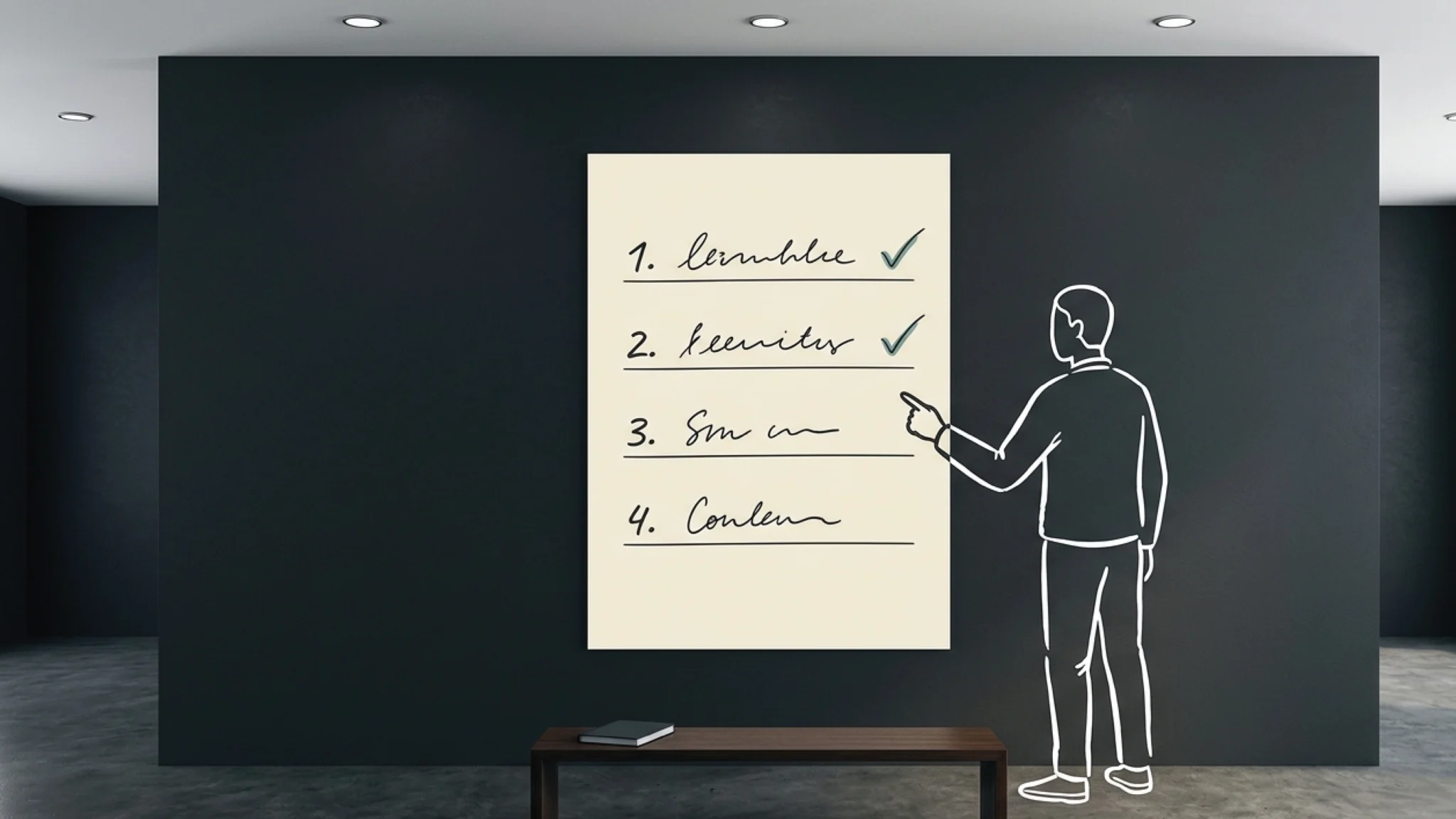
What Your Proposal Actually Says
Before your project began, you received a proposal with a defined scope. That scope included a specific number of revision rounds. The number typically falls between one and three, depending on the depth of work involved. It does not change mid-project unless we raise and agree a change order.
Check your proposal document if you are unsure how many rounds your project includes. Your project contact on WhatsApp can also clarify. The number is in there, clearly stated.
This matters more than it sounds. Knowing where you stand affects how you give feedback, how you prioritise your notes, and whether you are using each round to its full value.
What Counts as a Revision (and What Does Not)
A revision is a refinement of the selected direction. You have already chosen a concept, and the strategic framework is agreed. A revision works within that framework.
Revisions include:
- Adjusting the weight or spacing of a typographic element
- Testing a slightly different shade of the primary colour
- Refining the proportions or spacing of the logo mark
- Exploring an alternative layout of the same concept
A request that requires starting from scratch is a different matter entirely. Asking for a completely different concept, shifting the strategic direction, or introducing a brief element not discussed during the strategy phase: none of these qualify as revisions. We treat them as new directions and process them through a change order.
A practical test: if your feedback refines what already exists, it is a revision. If your feedback replaces what exists with something fundamentally different, it is a new direction.
When the Gray Areas Come Up
A client once approved a text-only logo and then asked to explore adding an icon. Whether that qualifies as a revision depends on what we agreed in the original concept. If the concept was always icon-plus-text and we are removing one element, that is a standard variation. If the concept was text-only and adding an icon means redesigning the logo, that is a new direction. We will always tell you clearly which category a request falls into before we proceed.
Why the Revision Structure Is Designed This Way
Unlimited revisions sound generous. In practice, they work against you.
When there is no defined end to the revision process, there is no forcing function for decision-making. Each round opens new comparisons, new second-guessing, new conversations about directions nobody agreed on in strategy. Projects stretch for months. The brand that eventually ships tends to be a compromise of every round of feedback rather than a clear expression of the strategy everyone aligned on at the start.
A defined number of revisions creates a healthy constraint. You give decisive, considered feedback rather than iterative tinkering. Most projects finalise well within the included rounds when you consolidate feedback and reference it against the agreed strategy.
The structure exists to protect the outcome. A brand that ships through a focused, purposeful process reflects your business clearly. One that goes through thirty rounds of competing opinions rarely does.
How to Use Each Round Well
1. Consolidate Before You Submit
One round of thorough, considered notes from everyone who needs input is worth more than three rounds of scattered impressions. Collect feedback from your team, align internally, and send one clear document. We also ask that the decision-maker reviews deliverables directly. A consolidated direction from someone with genuine authority moves faster than feedback filtered through multiple voices.
2. Reference the Strategy
The brand strategy you approved at the start of the project is the reference point for every design decision. When your feedback connects back to it (“this typeface feels too casual for the positioning we agreed on”), we can act on it precisely. Feedback based purely on personal preference without a strategic anchor can pull the project in a direction nobody planned for.
3. Prioritise What Genuinely Matters
Not every instinct needs to become a note. Ask yourself: does this change serve the business, or is it a personal preference? Both matter, but knowing the difference helps you spend your rounds on what counts.
If you reach your last round and still feel uncertain, ask an honest question: is the uncertainty about the design, or about the strategic direction underneath it? If the design is not landing, we can refine it. If the strategy is the real source of doubt, more revision rounds will not fix that. Surface the conversation early.
What Happens When Rounds Are Exhausted
Additional revision work is available as a change order. We quote it per scope, put it in writing, and both sides agree before work begins. The rate for out-of-scope work is KES 5,000 (~$50) per hour.
This is not a penalty. Extra work has a cost, and being upfront about that cost is more respectful than absorbing it silently. We raise this before it happens, so there are no surprises.
Questions about where your project stands in terms of revision rounds? Send a message to your project contact on WhatsApp.
Related Articles
- How to Give Feedback That Actually Moves the Project Forward
- What Happens If the Design Doesn’t Land?
- What to Expect During the Design Phase