Where We’re Based and How Our Remote Studio Works
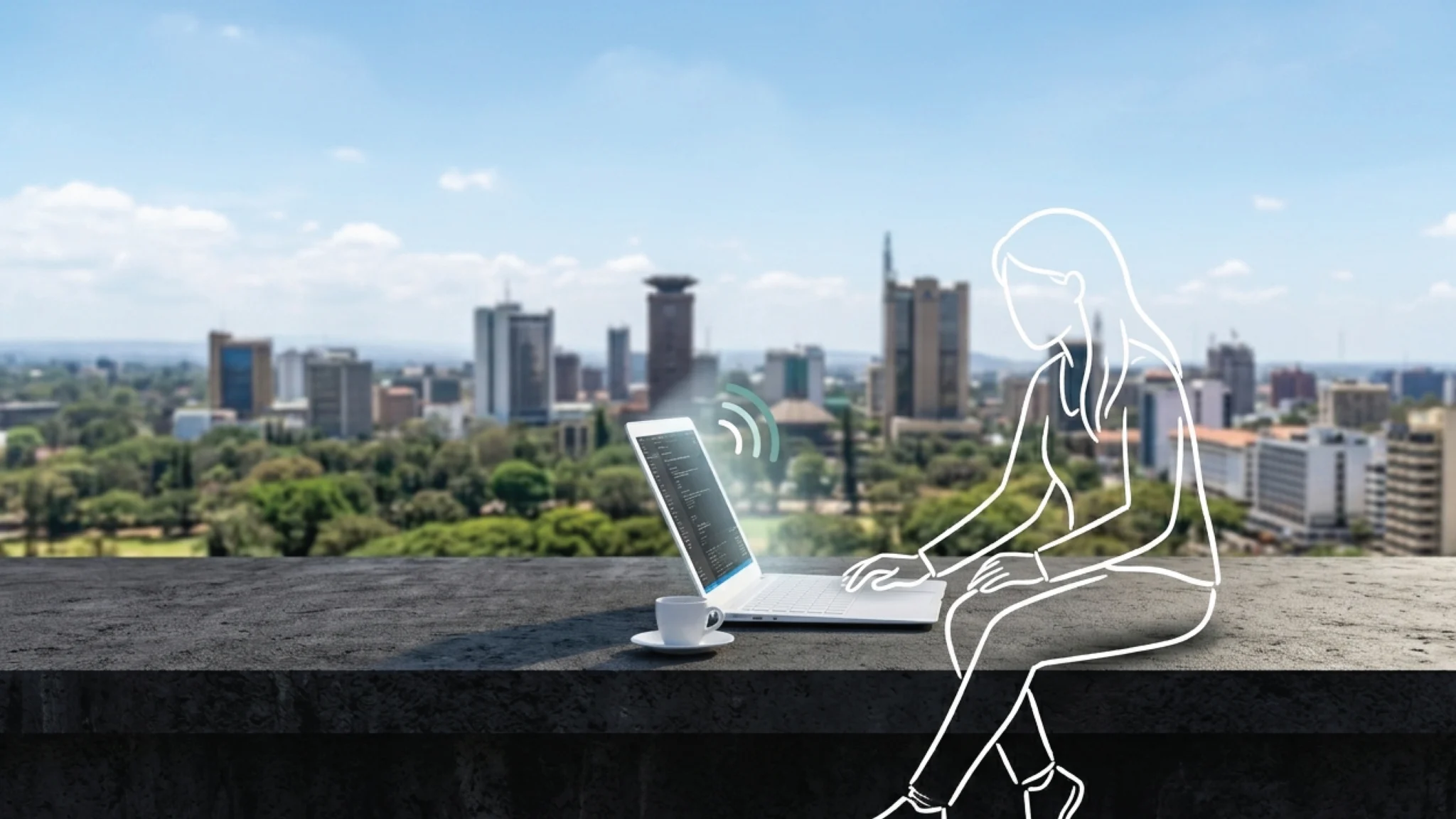
Kenyan Grafik is based in Nairobi and operates fully remote. No physical office. Meetings on Google Meet. Files on Google Drive. Primary communication on WhatsApp. Here is why that structure is deliberate, and why it works better for clients than a traditional office model would.
The Direct Answer
We are in Nairobi. We have no office.
Strategy sessions, concept presentations, stylescape reviews, and handoff calls all happen on Google Meet. Project files are organised and shared via Google Drive. Day-to-day communication runs on WhatsApp, which is how our clients actually communicate and how we move fastest. Email handles formal records, contracts, and file delivery.
That is the working setup. It is not a temporary arrangement or a cost-cutting measure. It is a deliberate structure built around what actually produces good work.
Three Reasons the Remote Model Is Intentional
Talent without geography.
We work with the best available designers, developers, and strategists, wherever they are. If the right person for a specific project phase is in Mombasa, Kampala, or further afield, we work with them. Tying the team to a physical location would reduce the quality of the people we can bring to a project. The work benefits from talent being selected on merit, not proximity.
Every shilling goes to the work.
A physical office in Westlands or Upper Hill is expensive. That cost does not stay with the agency. It gets passed to clients in the form of higher fees for the same quality of output. In our model, the budget a client allocates to a rebrand goes toward strategy, design, and implementation, not toward maintaining a reception area, a lease, and a coffee machine that signals credibility to walk-in visitors.
Creative work benefits from flexibility.
The best strategic thinking and the best design rarely happen between nine and five in an open-plan office. Our team works at the hours and in the environments where they produce their sharpest output. That might be early morning. It might be a Saturday. It might not look like a traditional workday at all. Clients benefit from that output. Watching it happen through a glass window in a Westlands office adds nothing to the quality of what they receive.
What Does Happen in Person
The remote model covers the strategy and design phases of every project. But there are moments where being physically present is the right call, and we show up for those.
Brand audits, where we evaluate a client’s physical spaces, existing signage, and environmental touchpoints as part of the discovery process, happen on-site where relevant. Training sessions, when included in the post-project support for Strategic and Transformational scope clients, happen at the client’s location. If implementation includes physical assets like signage or environmental design, we visit the spaces those assets will live in.
In-person contact happens when it genuinely adds something. Not as a default, not as a ritual, but when the work requires it.
On the Question of Trust
The concern underneath most questions about our location is a reasonable one: can we trust a studio we have never visited?
The honest answer is that the quality of a rebrand has no relationship to whether the agency has a nice office. What matters is the quality of the strategic thinking, the quality of the design, and the quality of the communication throughout the project. All three can be evaluated before you commit to anything.
The case studies on our website show the strategic thinking behind each project and the visual work it produced. The Rebranding Series documents the process applied to real businesses, publicly and in detail. The first conversation, which follows a Inquiry form submission, is a genuine exchange that gives you a clear sense of how we think and how we work before any contract is signed.
An office is easy to build. A track record takes longer.
[What Happens on Our Discovery Call?] covers how that first conversation works. [Who We Work With: And Who We Don’t] has the full picture of the kinds of businesses we work with and how we assess fit.
What This Means Practically for You
If you work with us, the practical implications are straightforward.
A stable internet connection for video calls. Responsiveness on WhatsApp during active project phases, when things are moving and feedback windows matter. Access to Google Drive on your end, so that someone on your team can find and copy the files delivered at handoff.
None of these are significant requirements. They are the standard infrastructure of any modern professional relationship. [The Complete Branding Process, Step by Step] walks through exactly how the remote process runs phase by phase, so you know what to expect before it starts.
If location was the thing holding you back from reaching out, it should not be. The Inquiry form is where the conversation starts.
Related Articles
- Who We Work With: And Who We Don’t
- What Happens on Our Discovery Call?
- The Complete Branding Process, Step by Step