

The Pattern That Slows Almost Every Creative Project
The design presentation arrives. You open it, look through everything, and feel that something is not quite right. You are not sure exactly what. So you write back: “It needs more energy.” Or: “Can we try something more modern?” Or, the most common one of all: “I’ll know it when I see it.”
We go back to the work. But without a clear steer, we are exploring in the dark. The next round comes back. Still not quite right. Another round begins. Time passes. Momentum stalls. Frustration builds on both sides.
This is not a design problem. It is a feedback problem. And it is almost entirely avoidable.
There is a useful distinction to make before any feedback round begins.
Strategic feedback is anchored in the brief and the brand direction we agreed during strategy sessions. It references what the brand is trying to achieve and evaluates the design against that. For example: “This colour palette reads as more corporate than approachable, and our clients have told us that accessibility is our main differentiator. Can we test a warmer version?” Or: “The icon is not distinctive enough. It looks like it could belong to any consultancy in Nairobi. We agreed we wanted to stand apart from that category.”
Personal preference feedback is anchored in the reviewer’s taste. “I do not really like serif fonts.” “My business partner thinks it looks too dark.” “My wife says it feels cold.”
Both types are understandable. Taste is real and it matters. But personal preference without a strategic anchor does not give us enough to work with. If we make the change, we are now designing to one person’s aesthetic rather than to the agreed brand direction. The work drifts. The strategy that was so carefully built in weeks one and two starts to erode.
Strategic feedback moves the project forward. Personal preference feedback is worth sharing, but worth labelling as such so we know how to weight it.
The best feedback does three things: it references the strategy, it is specific about what is not working, and it distinguishes between things that need to change and things that are preferences worth noting.
Some examples of feedback that works well in practice:
- “The icon is not distinctive enough. It looks like it could belong to any consultancy. Can we explore something more specific to our sector or the kind of work we do?”
- “The colour palette reads as more corporate than approachable, and our clients tell us accessibility is our main differentiator. Can we test a warmer version of this direction?”
- “I love concept A in terms of feel, but the tagline in concept B captures our positioning better. Is it possible to combine them?”
- “The overall direction is right, but the logo feels heavier than we discussed. Can we explore a lighter weight?”
Each of these is useful because it tells us what is not landing and gives us enough context to know where to go next. We are not guessing. We are refining.
Compare that to: “It needs more energy.” We do not know what energy means in this context. More colour? A different typeface? More dynamic composition? A completely different direction? Without the strategic anchor, we make a choice and it may or may not be the right one.
Feedback comes through two channels depending on the type of response.
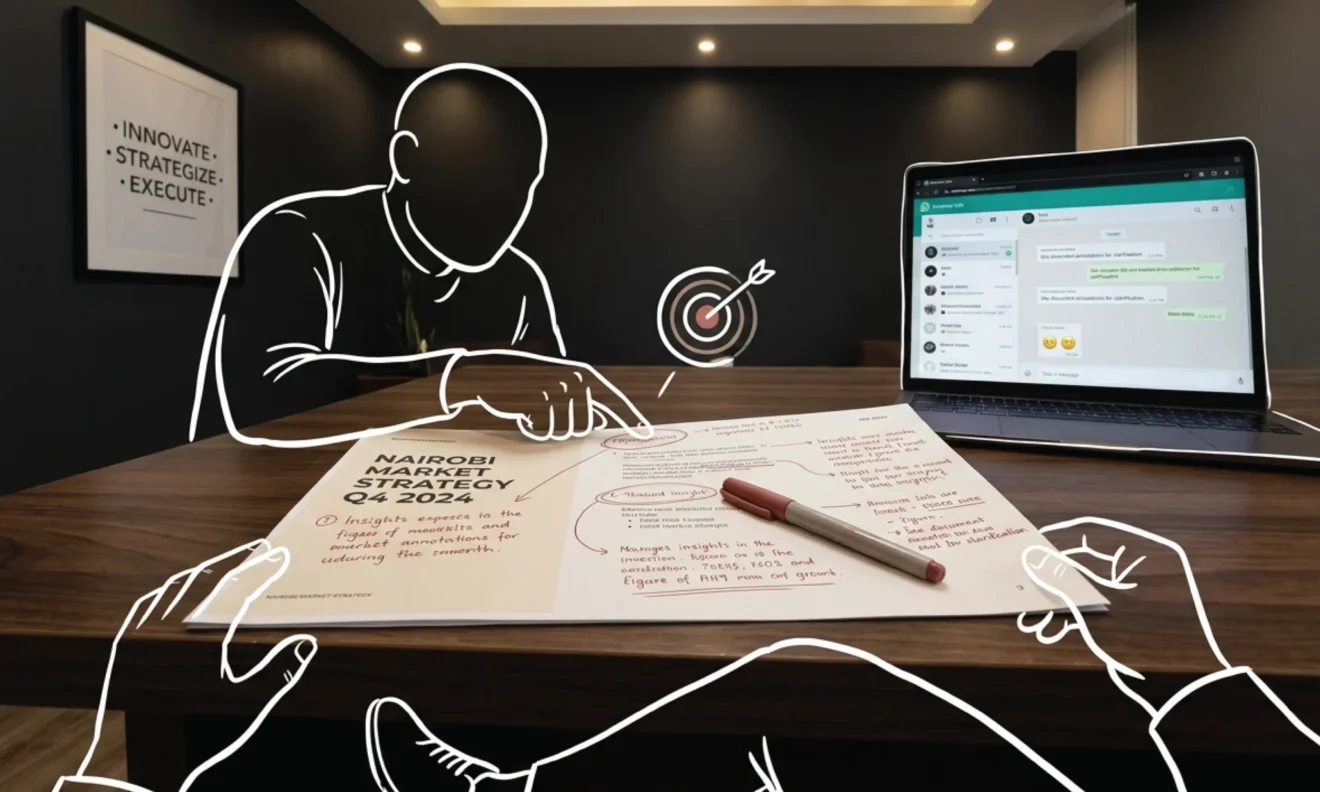
- For quick reactions, WhatsApp is the right place. If something immediately lands well or immediately does not, a voice note or a message is perfectly fine. We listen, we note it, and we factor it in.
- For detailed structured feedback on a full presentation, a shared Google Doc works better. It allows you to comment specifically on individual elements, which is far more useful than a paragraph of general impressions. We will set this up when the presentation goes out.
Where there are multiple stakeholders on the project, gather internal feedback and send us a consolidated response. Not separate messages from different people with conflicting opinions arriving at different times. We cannot act on “Ben says green, my partner says blue.” We need a direction, not a debate. The decision-maker’s view is what guides us. That is why they are in the room throughout the project. How Many Revisions Do You Get? explains how revision rounds are structured and what is included.
Feedback rounds have a response window, typically three business days. When responses come in on time, the project moves on schedule. When they are delayed, the timeline extends accordingly. We will remind you of the window, but the pace of the project is largely in your hands.
This happens more often than most clients expect, and there is nothing wrong with it.
Sometimes a design feels off and you genuinely cannot name why. The instinct is there but the words are not. The worst thing to do in this situation is push yourself to write feedback anyway, because vague written feedback is harder to work with than a direct conversation.
The right move is to say it directly: “Something is not landing for me and I am having trouble naming it. Can we jump on a quick call?” A fifteen-minute Google Meet or a WhatsApp voice note walking us through your reaction in real time is far more productive than a written note we have to interpret. We would rather talk it through than receive something vague and make assumptions.
This is not a failure of preparation on your part. Design is visual and emotional before it is verbal. The articulation often comes in conversation, not in writing.
The most important reassurance to take into every feedback round: you do not need to know design language. You do not need to know what a tracking adjustment is or what negative space means or how to describe a typographic hierarchy issue.
What you need to do is tell us honestly what you feel and, as specifically as you can, why you feel it. Reference the brief. Reference what you agreed you wanted the brand to do. Reference who your clients are and whether this design would resonate with them. That is enough for us to work with.
The brief was built together. The strategy was agreed together. Every piece of feedback that brings us back to that shared foundation moves the project forward. What to Expect During the Design Phase covers how each presentation stage is structured so you know what to look for and what decisions you will be asked to make.